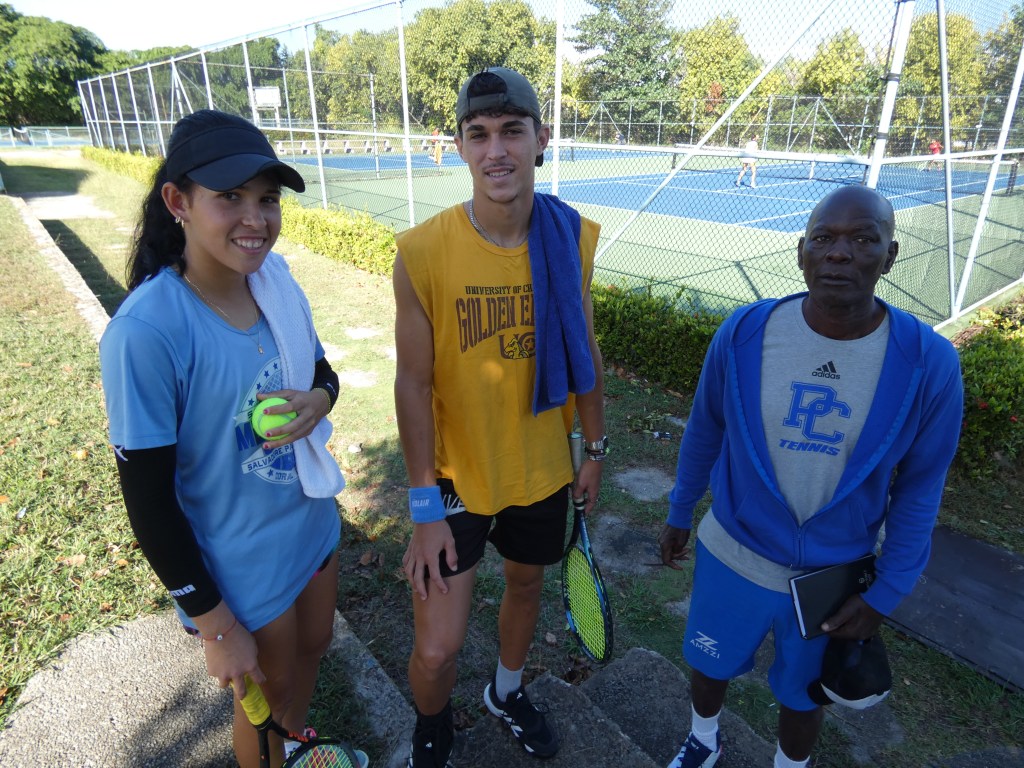
Cuban Junior Tenistas Try to Play Through the Noise
Steve Fogleman, Tennis Atlantic
It seems that the world is on fire sometimes, and perhaps it is. For decades, I used tennis to escape from politics but that escape, that separation has been harder and harder to acheive over the last ten years.
So it’s time to lean into the new order. I chose to start in Cuba last month.
The Republic of Cuba is a sovereign nation of, depending on who you ask, 8.5-11 million citizens. It is unclear how many people live there at any one time due to incomplete census data and fluctuating emigration. My first visit through the streets of Havana left me slightly speechless for a moment. An abundance of natural beauty and decaying baroque architectural grandeur greets you and simultaneously, you’re confronted with the failure of basic services like waste collection. Stray animals and occasional humans pick through piles of waste in search of sustenance. I am based in Baltimore and I believed that I was partially insulated to socio-economic disparity shock. I was not.
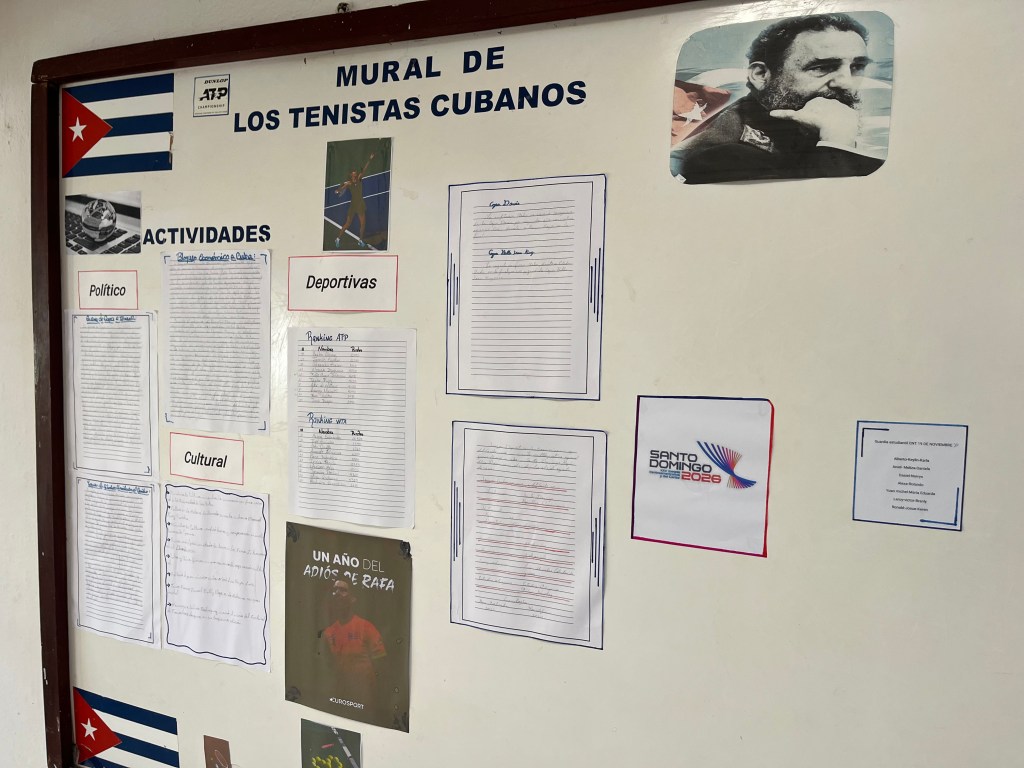
Let’s get the politics of the matter settled right here based on my anecdotal observations—it would appear that the current Cuban government is struggling to manage the domestic situation given all of the circumstances involved. Es complicado. El Bloqueo, or the crippling U.S. sanctions placed on the nation for over 63 years, has clearly taken its toll. The latest salvo of restrictions on foreign oil deliveries announced by the Trump administration on January 31 are intended to be the final straw to destroy the government and will almost certainly result in further unnecessary suffering of the innocent inhabitants of the island. But the Cuban people have a reputation for extreme resilience, having managed to survive the “Special Period” of the 1990s after the collapse of the Soviet Union and countless other disruptions to their lives. I hope they will see some relief soon because they desperately deserve it. They are friendly to and eager to meet USAsians, as our Canadian compatriots hillariously and properly call us. For all of the viciousness of South Florida sadists who make U.S. policy toward this island nation, the average Cuban still holds the U.S. in high regard, and a recent poll showed that a majority would like to move to the States in the future.
So, there’s politics and then there are the young tenistas.
Under a crystal clear January morning sky, I taxi from Old Havana to the Cuban National Tennis School through their version of the Lincoln Tunnel. On the other side of Havana Harbor the roads to the beach resorts emerge. A moment after the tunnel ends, the Estadio Panamericano beckons on my left side, a hulking, decrepit concrete arena where Cuba hosted an ITF $30K junior tournament last year. A giant sun-bleached mural of Che Guevera adorns the upper deck of the forum. I know I’m close to my destination now, but it turns out finding the tennis school and the headquarters of the Tennis Federation is an upper-level exam for my local driver and for GPS systems. After we pull over for good old-fashioned directions from a pedestrian, we exit the Avenida Monumental highway and pass in order, the National Aquatic Center, National Velodrome and the National School of Battle before taking a right turn down an unmarked lane and see a few clay courts in the distance to tell us that we’re finally here.
I’m off the noisy highway out front and early for my arranged meeting with CFTC President Alexander Ferrales. I don’t like to be late. I worry about my deplorable Spanish. One of my regrets in life is learning French at a young age and stunting proper Spanish pronunciation forever. Ferrales comes down from his second floor office and greets me warmly, but it turns out his English doesn’t fare any better than my Spanish. Luckily for me, Federation Vice President Wilfredo Henry-Torriente does speak a little English and he gets us through.
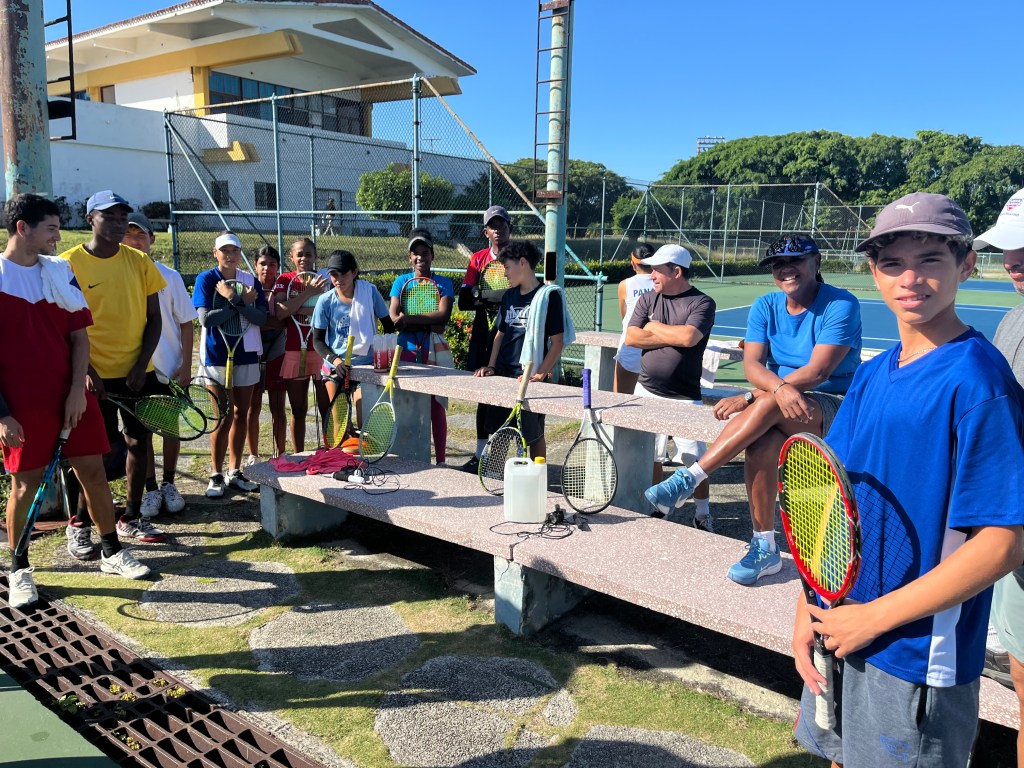
My attention quickly turns to the players. I feel like a colonizer in even describing the teen players. ‘They’re just like us!’ Yes, they are. I don’t visit their homes, don’t meet their families or eat with them, but only spend a half hour watching their courtside instruction, going through drills. But it is immediately obvious that like their counterparts across the globe, they love the game and all of them harbor dreams to play at the highest levels.
They compete in regional Davis Cup Union events whenever the budget allows the travel. In comparison, the Federation’s annual budget is about the same as the yearly compensation of a top USTA official. Yet they persevere. The kids are especially grateful to ITF and Kids on the Ball for donating $150,000.00 to repair their hardcourts last year after donating at least $500,000.00 to build and maintain the playing surfaces over the past decade. One of the students tells me that it’s an honor to step onto these courts, the finest planchas in the nation. For me, it’s an honor to speak with the group, rendering it unmistakable that they are just like all collective junior players everywhere.
I make sure to take a poll on their favorite professional players of the day. The results for favorite ATP player was about what you’d expect: Carlos Alcaraz wins first place with a slight majority, with a retired Rafael Nadal second and Novak Djokovic scoring third. The plebiscite for favorite WTA player is unanimous—Coco Gauff received all 18 votes. It just hit me that you have 18 kids–10 boys and 8 girls–receiving the highest level of instruction available in a country of, let’s round it to 10 million inhabitants. That means one in 555,555 Cubans is at tennis school today. Perhaps needless to say, but it is an exceptional opportunity for them.
The current political climate makes it exceptionally difficult for U.S. citizens to visit the country and to even navigate the donation of goods. Treasury Department regulations forbid the support of the Cuban government by U.S. citizens, meaning that you must be careful where you eat, where you stay and how you give. The government owns many of the hotels and restaurants. Donating to a school can be seen as donating to the government. Supporting individual Cubanos is still allowed. For all you have learned about economic systems, there is a surprising amount of micro-capitalism in Cuba. There are only a handful of self-identified communist nations left on the planet and this one appears to on its way to hybrid status, like Vietnam.
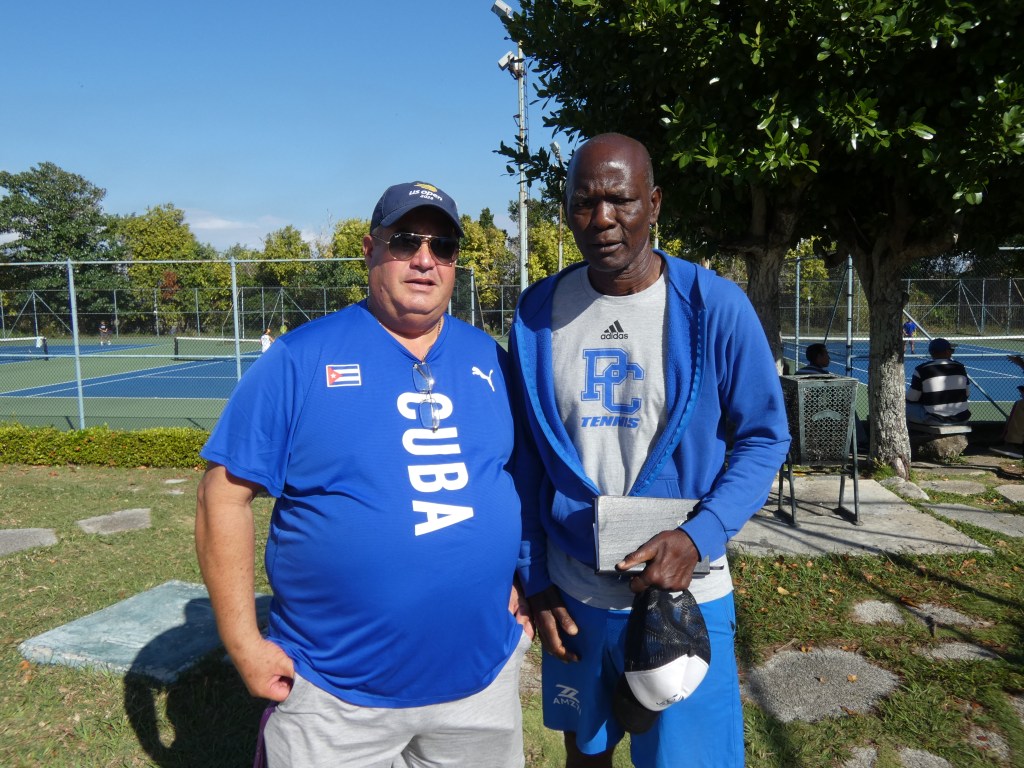
Tennis knows no borders and that is one of the greatest beauties of the sport. Unfortunately, governments are obsessed with details like borders. I’ve never met a group of players that I am more moved to assist with their future endeavors. No matter how small my individual gestures, I won’t let loco laws blockade my desire to help these kids realize their dreams. The fact is that it’s easier to help if you don’t carry a U.S. passport. Canadians flying into Havana on the way to holiday at the resorts in Varadero can ask their taxi driver to stop on the route from the airport and take a quick detour to the school to make a donation. Ferrales specified that “our students very much need string and grip tape. And shoes.” For a traveler, a 200-meter string spool and a spool of grip tape won’t take up a lot of luggage space. Shoes are bulkier and more difficult to arrange transit, but I’m told that the players often use glue to deal with separation of the soles and they reuse grip tape until it falls off of the racquet. Today, my donation consists of racquets and balls to give to individual players, but they turn out to be too bulky for the amount of supplies I could carry, so I recommend the higher cost, lower volume supplies. I’m back in Havana soon. If you want to help, contactame.
Debate communism versus capitalism all day long. While you do, remember that the kids at the Cuban National Tennis School aren’t political. They’re kids. They deserve more than labels. They deserve our help.

 Tennis Atlantic
Return Serve?